1. Introduction to Environmental Psychology
“A branch of social science that studies the link or relationship between environment or surroundings and the human beings.”
It helps researchers understand how man is shaping his outer world and making environment for himself.
It also gives information about us i.e. humans, the way we built physical world and then shape the environment accordingly with detail in depth explanation.
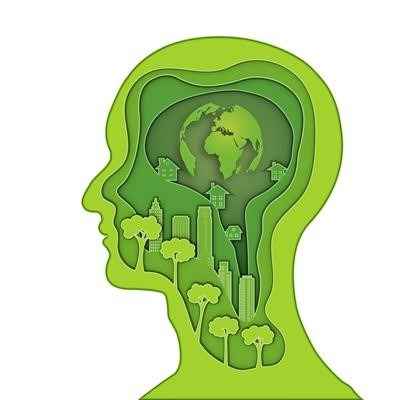
Environmental psychology is a multidisciplinary field that examines the dynamic relationship between people and their environments. It focuses on how physical spaces, urbanization, climate, and social settings affect human behavior, well-being, and perception. This article will provide an in-depth overview of environmental psychology, its scope, theories, research methods, and the impact of various environmental factors on human behavior.
In universities many courses are being taught to conduct environmental research. Various universities are offering BS, MSc and PhD degrees in this particular field of study. Contents of environmental psychology also attract biological psychologists to study about environment too.
Some experts are offering online courses related to environmental psychology. Previously, it was tough to find a book on this topic but now even textbooks are available in the market. Basically human being are the product of environment.
1.1 Definition of Environmental Psychology
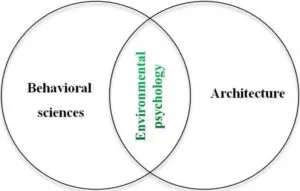
Environmental psychology is the scientific study of the reciprocal relationship between individuals and the physical surroundings in which they live, work, and interact. It seeks to understand how natural and built environments influence human thoughts, feelings, and actions, and vice versa. The field integrates elements from psychology, sociology, architecture, and urban studies to explore how environmental factors affect human health, social behavior, cognitive functioning, and emotional well-being.
1.2 Scope of Environmental Psychology
The scope of environmental psychology is broad, covering various aspects of human interaction with the environment, including:
- Perception and Cognition: How people perceive and process environmental stimuli.
- Behavioral Responses: How the environment influences behaviors such as aggression, cooperation, and motivation.
- Social Interaction: The effect of physical spaces on social relations and communication.
- Environmental Stress: How environmental conditions like noise, pollution, and crowding affect mental health.
Environmental psychology also looks into designing spaces that enhance human well-being, whether in residential areas, workplaces, schools, or public spaces.
1.3 Historical Background
Environmental psychology as a formal discipline began in the 1960s, emerging out of a need to understand the increasing complexities of human behavior in rapidly urbanizing societies. Early pioneers, such as Kurt Lewin and Roger Barker, laid the foundation for studying human behavior in relation to environmental contexts. Their research on social spaces, place attachment, and human-environment interaction significantly contributed to the development of this field.
1.4 Importance and Application of Environmental Psychology
The importance of environmental psychology lies in its ability to inform the design of physical spaces that promote health, productivity, and well-being. Applications of environmental psychology are seen in various fields, including:
- Urban Planning: Designing cities that are conducive to social interaction and mental health.
- Healthcare Design: Creating hospital environments that reduce stress and promote healing.
- Workplace Design: Optimizing office spaces to increase productivity and employee satisfaction.
- Environmental Conservation: Encouraging sustainable practices and reducing ecological footprints.
2. Nature and Human Behavior
2.1 Definition and Scope
Nature has a profound impact on human behavior. Environmental psychology studies how natural settings, from forests to urban parks, influence physical and psychological states. Understanding human behavior in response to environmental stimuli can lead to better living and working spaces.
2.2 Environmental Perception, Cognition, and Attitude
Environmental perception refers to how individuals interpret and make sense of their surroundings. Factors such as cultural background, previous experiences, and personal preferences shape one’s environmental perception. For example, some individuals may find urban environments stimulating, while others may feel overwhelmed by noise and crowding.
2.3 Social Interaction and the Environment
Social behavior is significantly influenced by environmental design. Public spaces, for instance, are designed to encourage or discourage interaction among individuals. The arrangement of furniture, accessibility, and spatial layout all affect how people interact in social settings.
2.4 Impact of Environment on Personality Development and Individual Differences
The environment plays a pivotal role in shaping personality traits. Individuals raised in different environmental conditions may exhibit varying levels of openness, aggression, and introversion. Environmental psychologists examine how factors like childhood home, social setting, and community structure influence personal development.
3. Theories of Environmental Psychology
3.1 Arousal Theories
Arousal theories suggest that different environments create varying levels of sensory stimulation, which can influence emotional and physical responses. For example, natural environments are often associated with calming effects, while urban settings may produce heightened levels of stress.
3.2 Stimulus Load
The stimulus load theory posits that excessive sensory input, such as noise, bright lights, or crowding, can overwhelm an individual’s cognitive resources, leading to stress and reduced performance.
3.3 Behavioral Constraint
Behavioral constraint theories explore how environments can limit or restrict behaviors. Overcrowding, for example, limits personal space, which can lead to frustration and aggressive behavior.
3.4 Adaptation Level Theories
Adaptation level theories focus on how individuals adapt to their environment over time. A person who initially feels discomfort in a noisy, busy city may eventually adjust to it, indicating a dynamic process of adaptation to environmental factors.
3.5 Environmental Stress Theories (Ecological Theories)
These theories examine the stress caused by environmental factors such as noise, pollution, and climate change. Ecological theories explore how these stressors affect health, behavior, and social relations.
4. Research Methods in Environmental Psychology
Environmental psychology employs a range of research methods, including surveys, experiments, case studies, and observational studies, to understand how different environments affect human behavior. These research methods help psychologists create evidence-based recommendations for designing spaces that improve quality of life and promote sustainable behavior.
5. Weather, Climate, and Human Behavior
5.1 Disasters, Toxic Hazards, and Pollution
Environmental psychology also addresses the impact of environmental disasters, such as hurricanes and floods, as well as the long-term effects of pollution and toxic hazards on human behavior and mental health.
5.2 Catastrophes and Human Adjustments
Human responses to catastrophic events, such as natural disasters or climate change, are a key area of study in environmental psychology. Theories suggest that people adapt differently based on psychological resilience, social support systems, and cultural factors.
5.3 Future Environmental Challenges Posed to Humanity
As the global population continues to rise, environmental psychology will play a crucial role in addressing challenges like climate change, resource depletion, and urban sprawl. Understanding how these challenges impact human behavior will be essential for creating sustainable solutions.
5.4 Impact of Environmental Changes on Industrial and Geographical Development
Environmental changes, including climate shifts and urbanization, have a significant impact on industrial growth and geographical development. Environmental psychologists study how these factors shape human behavior and societal changes.
5.5 Personal Space and Territoriality
Personal space refers to the physical distance individuals maintain between themselves and others. Territoriality, on the other hand, involves behaviors related to defending personal or group spaces. Both concepts are essential in understanding human interactions in crowded and private environments.
5.6 Noise, Air, and Water Pollution
Noise pollution, air quality, and water contamination are environmental stressors that affect human health and behavior. Research in environmental psychology helps in designing solutions to mitigate these harmful effects.
5.7 Factors in Adjustment to Environment: Gender, Age, Job, Family, Fashion, Religion, Society
Personal adjustments to environmental conditions are influenced by a wide range of factors, including gender, age, social status, occupation, and cultural values. Environmental psychologists study how these factors interact to shape human behavior.
5.8 Effects of Environmental Stressors
Environmental stressors, such as poor living conditions, noise, or social isolation, can have significant psychological and physiological effects. These stressors are studied to develop interventions that improve well-being.
6. Town Planning and Urbanization
6.1 Phenomenon of Urbanization
Urbanization is the process of population movement from rural to urban areas, which brings about changes in lifestyle, social behavior, and mental health. Environmental psychology examines how urban environments influence human behavior and well-being.
6.2 Planning and Design for Human Behavior
Effective urban planning requires an understanding of human behavior. Environmental psychologists collaborate with architects and urban planners to design spaces that promote well-being, reduce stress, and enhance social interaction.
6.3 High Density and Crowding
High-density living conditions can cause feelings of crowding, leading to stress and social conflict. Research in environmental psychology helps in designing urban spaces that mitigate these effects.
6.4 The Built Environment and Human Adjustment
The built environment includes structures like buildings, roads, and public spaces. How individuals adapt to and interact with these spaces is a key area of study in environmental psychology.
6.5 Design in Residential and Institutional Environments
The design of homes, schools, and workplaces plays a significant role in shaping behavior and well-being. Environmental psychologists help design spaces that cater to both functional needs and emotional well-being.
6.6 Work, Learning, and Leisure Environments
Designing environments for work, education, and leisure is essential for productivity, creativity, and relaxation. Environmental psychology provides insights into how these spaces can be optimized.
6.7 Changing Behavior to Save the Environment
Environmental psychology also looks at how behavior can be changed to address environmental issues such as climate change and resource conservation.
6.8 Mob and Group Behavior in Environmental and Cultural Variances
Group behavior, including mob mentality, is influenced by environmental factors such as crowd density and cultural context. Understanding these behaviors is crucial for managing public events and creating harmonious social spaces.
Approaches to Environmental Psychology
There are two schools of thoughts, when it comes to environmental psychology; i.e. constructivism and realism. Some details are appended below:-
(a) The Constructionist Approach
The constructivists tend to be those individuals who develop ways and these ways help to improve the overall environment; however, they do tend to be on the more extremist side in their methods.
(b) The Realist Approach
The realists are those who want to find the solutions that are urgently needed for the improvement of the environment.
Moreover, these individuals also understand that there are some concessions that are needed to be made out of necessity for the benefit of humans.

Designing of Environmental Psychology
Apparently people may feel that psychologists related to environment just focus on the ways and means of how an environment affects our mood, emotions and attitudes but in fact environmental psychologists have a close eye on the ecology and the paradigm of how people as humans being affect the environment.
There are many examples of human how they are affecting environment, few of them are appended below: –
- Rise in temperature of globe (Manmade machines and other human activities are increasing the overall temperature of earth and ultimately this surge in temperature affecting the moods and behaviours of human being.
- The release of greenhouse gases is increasing day by day. This is happening because of cutting forests at large scale, installation of heavy industries in natural environment and un-controlled burning of fossil fuels etc. The greenhouse effect is a natural phenomenon. Psychologists studies the close relationship and impact of these activities on humans.
After reading above said information, it is clear that we can impact our environment positively by taking the following steps:-
- By increasing green spaces
- By developing sustainable communities
- By taking tangible steps to enrich environment for wildlife
It is very important for all of us in general and environmental psychologists in particular that we should have some proper planning, effective policies, long term ideas, sustainable buildings and infrastructure.
These are the ways in environmental psychology through which we can overall improve our environment and ultimately improvement in moods and emotions of community will be seen. That particular type of environment can be called as social or cultural environments.
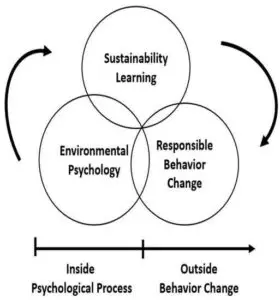
Popular Terms of Environmental Psychology
Following are few renowned terms related to environmental psychology:
- Environmental Attitude: If we put some sincere efforts to make our environment healthy and livable then our attitude is said to be an environmental attitude.
- Area Affection: It is the sensitive and affectionate pledge between a person and the place or area where he is living.
- Environmental Restoration: All efforts and energies used for the betterment of environment particularly bringing the natural environment back to its track. The whole process is known as environmental restoration which is directly affecting human psychology.
Environmental Psychologists
For the more studies about environmental psychology, the work of following researchers can be studied: –
- Linda Steg (University of Groningen, Netherlands)
- Robert Gifford (University of Victoria, Canada)
- Stephine Wilkie (University of Sunderland, UK)
Conclusion
Generally, environmental sociology study is important for both the categories i.e. to the environment and to the human being, firstly it helps in the preservation of both nurture and nature, then it gives man an opportunity to change the negative actions if any that may damage relationship to a minimal.
It also helps future researches that can help when it comes to finding a careful balance to help mankind, enlightened the share of give and take between human and environment, as well as environment sociology help to determine the mankind and nature to interact each other in a more productive way.
For more information about Environmental Psychology Contact Us.
Related:- Join Facebook Community of Psychology Spirit Here.
Important Topics of Environmental Psychology
Recommended Books
- Baum, A. (1998). Advances in environmental psychology. New York: Lawrence Erlbaum Associate.
- Bell, P. A., Greene, T. C., Fisher, J. D., & Baum, A. (2001).Environmental psychology(5th ed.). USA: Harcourt College Publishers.
- Cassidy, T. (1997).Environmental psychology. UK: Psychology Press.
- Garling, T., & Golledge, R. (Eds.). (1993). Behaviour and environment: Psychological and geographical approaches. Amsterdam: North Holland.
- Golledge, R. G. & Stimson, R. J. (1997). Spatial behavior: A geographic perspective. NY: Guilford Press.
- Spindler, G. D. (1998).Making of psychological anthropology. California: University of California Press.
- Stokols, D., & Altman, I. (Eds.).(2000). Handbook of environmental psychology. New York: Wiley.
FAQs
Latest Posts
- Integrative Mental Health : 5 Proven Ways to Heal

- Story Telling is Good for Mental health

- what is cognitive dissonance?

- What is locus of control
- What are peak Experiences in Psychology?