Introduction to Psychology
In a nutshell, we can say that the scientific study of mind and behavior is called the Psychology. The base form of word psychology is basically the combination of two Greek words as follows: –
- “Psyche” (life)
- “Logos” (explanation)
Hence, we can simple understand its meaning as the explanation of life, a study or knowledge which deals with the explanation of life is called Psychology. It deals with every area of life i.e. the students, the media, the society itself, even it has become a popular part of everyday life.
On television, we see many psychologists who are continuously providing personal advice to large number of patients suffering from personal and family difficulties. For understanding of impact of psychology, we can see many movies which actually psychological thrillers as case studies.
During prime time, viewers see many action drama or serials related to crime where forensic psychologists are busy in knowing the cause of crime by providing tangible evidences to the investigators. They are trying their best to solve the complexity of crime.
Even viewers are sharing their experiences as they might have visited psychologists or meet school counselor, or consulted family therapists etc. It is a habit of people to show their interest in solution of any domestic problem especially during marriage functions, or religious gatherings.
It is just because we are exposed to the work of psychologist in our daily lives frequently, and we are very sure what is the role of a psychologist and what benefits do people are getting from him. Students are studying psychology as a subject in their BS, Masters and PhD programs enthusiastically.
Mainly they are more interested in social psychology and clinical psychology. Researchers have also introduced many more disciplines of psychology like developmental psychology, environmental psychology, and psychology of religion etc.
Role of Psychologists
After life experiences, we can say that psychologists are playing their role positively in the betterment of patients’ lives. Undoubtedly I can say that their role is exemplary.
No only they provide positive counseling and therapy to people in distress but also they do significant work in forensic laboratories which are very essential for provisioning of evidences. These evidences are then produced to court of law to maintain justice in the society.
Even then we are not sure how many other fields of life where psychologists are working and playing their role, probably we are not aware of it. There are some research laboratories in developed countries, there are research and teaching hospitals and some other departments are there where behaviors of humans and animals are being studied.
Contemporary Psychology
In contemporary psychology, it can be surprising for you that psychologists are studying and working on very diverse topics like anxiety in children, the possible meanings of un-usual dreams, the effects of drug on thinking capability, how birds of different breed recognize each other while sitting on a same tree.
Researchers are also working on the topic that how people of different communities can negotiate and engage in positive solutions of their problems. Psychologists are also working for the people of terrorist hit countries so that the mental stress of target population can be minimized.
Advancements in Psychology
Day by day advancement in the field of psychology is happening. Psychologists are working in the following areas as well:
- the impact of alcohol
- Causes of excessive drug addiction
- Reasons of memory loss
- Sudden rise and fall in emotions
- Acceptance and rejection in love
- Why do people become aggressive without any apparent reason
- How can similarities among cultures be noticed etc
As world is now focusing on financial matters a lot, hence the psychologists are working on this aspect of humans.
They use variety of methodologies, observational techniques, conducting interviews of businessman to study the rise or fall of certain business.
Advancements have led to new treatments for mental health disorders, improved understanding of human behavior, and new areas of research and exploration.

Use of Empirical Methods in Psychology
Almost all scientists, whether they are physicists, chemists, biologists, sociologists, or psychologists, use empirical methods to study the topics that interest them. Empirical methods include the processes of collecting and organizing data and drawing conclusions about those data.
The empirical methods used by scientists have developed over many years and provide a basis for collecting, analyzing, and interpreting data within a common framework in which information can be shared. We can label the scientific method as the set of assumptions, rules, and procedures that scientists use to conduct empirical research.

Although scientific research is an important method of studying human behavior, not all questions can be answered using scientific approaches. Scientists therefore draw a distinction between values and facts.
Values are personal statements such as “Abortion should not be permitted in this country,” “I will go to heaven when I die,” or “It is important to study psychology.”
Facts are objective statements determined to be accurate through empirical study. Statements that cannot be objectively measured or objectively determined to be true or false are not within the domain of scientific inquiry.
The Challenges of Studying Psychology
It is very difficult to restrict psychologist with less experience from false explanation of behavior. There are certain aspects of biological psychology as well. Psychologist cannot focus all the time the conscious experiences of humans.
He may not allow to ask questions related to gender from his patient. The deterioration in health can expand consciousness of patient in negative way. Psychologist may suggest medication, electron-convulsive, shock therapy, and psycho-surgery of patient.
Understanding and attempting to alleviate the costs of psychological disorders such as depression is not easy, because psychological experiences are extremely complex.
A major goal of psychology is to predict behavior by understanding its causes after detailed analysis of the concept nature vs nurture. Making predictions is difficult in part because people vary and respond differently in different situations. Individual differences are the variations among people on physical or psychological dimensions.
For instance, although many people experience at least some symptoms of depression at some times in their lives, the experience varies dramatically among people.
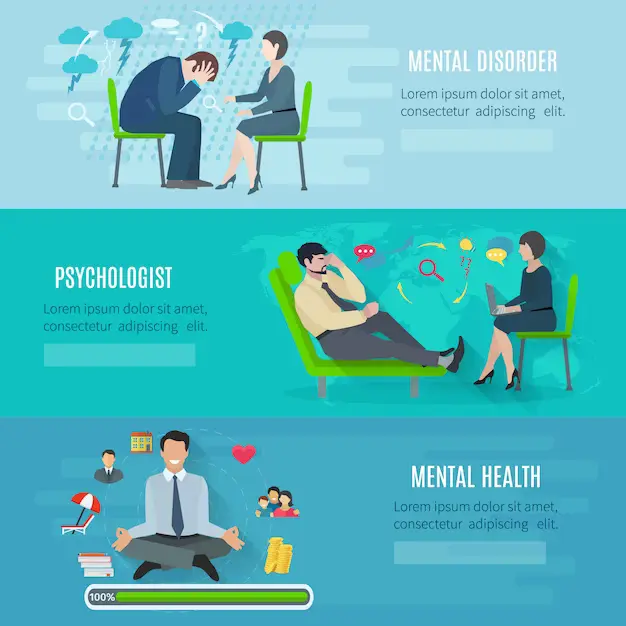
Some people experience major negative events, such as severe physical injuries or the loss of significant others, without experiencing much depression, whereas other people experience severe depression for no apparent reason.
Other important individual differences that has been discussed on other articles available on our website include differences in extraversion, intelligence, self-esteem, anxiety, aggression, and conformity. The predictions made by psychologists (and most other scientists) are only probabilistic.
We can say, for instance, that people who score higher on an intelligence test will, on average, do better than people who score lower on the same test, but we cannot make very accurate predictions about exactly how any one person will perform.
Another difficulty in studying psychology is that much human behavior is caused by factors that are outside our conscious awareness, making it impossible for us, as individuals, to really understand them.
The role of unconscious processes was emphasized in the theorizing of the Austrian neurologist Sigmund Freud, who argued that many psychological disorders were caused by memories that we have repressed and thus remain outside our consciousness. Unconscious processes will be an important part of our study of psychology.
Related: Complete Course of “Introduction to Psychology”
Famous Psychologists
| Time Period | Name | Details |
| 428-347 BC | Plato | Greek Philosophers who argued for the role of nature in psychological developments |
| 384-322 BC | Aristotle | Same role as Plato (Greek Philosophers) |
| 1588-1679 | Thomas Hobbes | English Philosopher |
| 1596-1650 | Rene Descartes | French Philosopher |
| 1632-1704 | John Locke | English Philosopher |
| 1712-1778 | Jean-Jacques Rousseau | French Philosopher |
| 1801-1887 | Gustav Fechner | German experimental psychologist who developed the idea of the just noticeable difference (JND), which is considered to be the first empirical psychological measurement. |
| 1809-1882 | Charles Darwin | British naturalist whose theory of natural selection influenced the functionalist school and the field of evolutionary psychology. |
| 1832-1920 | Wilhelm Wundt | German psychologist who opened one of the first psychology laboratories and helped develop field of structuralism. |
| 1842-1910 | William James | American psychologist who opened one of the first psychology laboratories and helped develop field of functionalism |
| 1849-1936 | Ivan Pavlov | Russian physiologist whose experiments on learning led to the principles of classical conditioning |
| 1850-1909 | Hermann Ebbinghaus | German psychologist who studied the ability of people to remember lists of nonsense syllabus under different conditions |
| 1856-1939 | Sigmund Freud | Austrian psychologist who founded the field of psychodynamic psychology |
| 1867-1927 | Edward Bradford Titchener | American psychologist who contributed to the field structuralism |
| 1878-1958 | John B. Watson | American psychologist who contributed to the field behaviourism |
| 1886-1969 | Sir Frederic Bartlett | British psychologist who studied the cognitive and social processes of remembering |
| 1896-1980 | Jean Piaget | Swiss psychologist who developed an important theory of cognitive development in children |
| 1904-1990 | B.F.Skinner | American psychologist who contributed to the school of behaviourism |
| 1926-1993 | Donald Broadbent | British cognitive psychologist who was a pioneer in the study of behaviourism |
| 20th & 21st Centuries | Linda Bartoshuk; Daniel Kahneman; Elizabeth Loftus; George Miller | American psychologists who contributed to the cognitive school of psychology by studying learning, memory, and judgment. An important contribution is the advancement of the field of neuroscience. Daniel kahneman won the Nobel Prize in Economics for his work on psychological decision making. |
| 20th & 21st Centuries | Mahzarin Banaji; Marilynn Brewer; Susan Fiske; Fritz Heider; Kurt Lewin; Stanley Schachter; Claude Steele; Harry Triandis | American psychologist who contributed to the social-cultural school of psychology. Their contributions have influenced an understanding of how people develop and are influenced by social norms. |
Comparison of Various School of Thoughts in Psychology
Some prominent school of thoughts are appended below. As a reader you should identify the concept and prepare a single line statement regarding each of the school.
| School of Thoughts | Nomenclature |
| Structuralism | Uses the method of introspection to identify the basic elements or “structures” of psychological experience |
| Functionalism | Attempts to understand why animals and humans have developed the particular psychological aspects that they currently possess |
| Psychodynamic | Focuses on the role of our unconscious thoughts, feelings, and memories and our early childhood experiences in determining behavior |
| Behaviourism | Behaviour also involves evolutionary perspective of psychology. Researches have revealed that psychology is a science of behaviour and deals with the mind and brain of person. The study of behaviour and mental processes is the central core area of focus in psychology. Based on the premise that it is not possible to objectively study the mind, and therefore that psychologists should limit their attention to the study of behavior itself. Psychologists are conducting surveys on behaviourism. |
| Cognitive | Cognition is exploring the science of mind. It is mind who accurately isolates cause and effect experiments, and the experimenters should be neutral in their investigations. The study of mental processes, including perception, thinking, memory, and judgments |
| Social-cultural | You might have attended a lecture by the psychologist who uses all above said terms in his presentation. The study of how the social situations and the cultures in which people find themselves influence thinking and behavior. To accurately infer cause and effect relationship, experimenters should be versed with updated knowledge of socio-cultural domain. |
Careers & Disciplines in Psychology
| Knowledge of Psychology | Detailed Description | Careers & Disciplines |
| Biopsychology and neuroscience | This field examines the physiological bases of behavior in animals and humans by studying the functioning of different brain areas and the effects of hormones and neurotransmitters on behavior. | Most bio-psychologists work in research settings—for instance, at universities, for the federal government, and in private research labs. |
| Clinical and counseling psychology | These are the largest fields of psychology. In present time, psychologists are also therapists. The focus is on the assessment, diagnosis, causes, and treatment of mental disorders. | Clinical and counseling psychologists provide therapy to patients with the goal of improving their life experiences. They work in hospitals, schools, social agencies, and in private practice. Because the demand for this career is high, entry to academic programs is highly competitive |
| Cognitive psychology | This field uses sophisticated research methods, including reaction time and brain imaging to study memory, language, and thinking of humans. | Cognitive psychologists work primarily in research settings, although some (such as those who specialize in human-computer interactions) consult for businesses. |
| Developmental psychology | Cognitive psychologists work primarily in research settings, although some (such as those who specialize in human-computer interactions) consult for businesses. | Many work in research settings, although others work in schools and community agencies to help improve and evaluate the effectiveness of intervention programs such as Head Start |
| Forensic psychology | Forensic psychologists apply psychological principles to understand the behavior of judges, attorneys, courtroom juries, and others in the criminal justice system. | Forensic psychologists work in the criminal justice system. They may testify in court and may provide information about the reliability of eyewitness testimony and jury selection. |
| Health psychology | Health psychologists are concerned with understanding how biology, behavior, and the social situation influence health and illness | Health psychologists work with medical professionals in clinical settings to promote better health, conduct research, and teach at universities |
| Industrial-organizational and environmental psychology | Industrial-organizational psychology applies psychology to the workplace with the goal of improving the performance and well-being of employees | There are a wide variety of career opportunities in these fields, generally working in businesses. These psychologists help select employees, evaluate employee performance, and examine the effects of different working conditions on behavior. They may also work to design equipment and environments that improve employee performance and reduce accidents. |
| Personality psychology | These psychologists study people and the differences among them. The goal is to develop theories that explain the psychological processes of individuals, and to focus on individual differences. | Most work in academic settings, but the skills of personality psychologists are also in demand in business— for instance, in advertising and marketing. PhD programs in personality psychology are often connected with programs in social psychology. |
| School and educational psychology | This field studies how people learn in school, the effectiveness of school programs, and the psychology of teaching | School psychologists work in elementary and secondary schools or school district offices with students, teachers, parents, and administrators. They may assess children’s psychological and learning problems and develop programs to minimize the impact of these problems |
| Social and cross-cultural psychology | This field examines people’s interactions with other people. Topics of study include conformity, group behavior, leadership, attitudes, and person perception. | This field examines people’s interactions with other people. Topics of study include conformity, group behavior, leadership, attitudes, and person perception. |
| Sports psychology | This field studies the psychological aspects of sports behavior. The goal is to understand the psychological factors that influence performance in sports, including the role of exercise and team interactions | Sports psychologists work in gyms, schools, professional sports teams, and other areas where sports are practiced |
Research on Animals in Psychology
Animals make up an important part of the natural world, and because some research cannot be conducted using humans, animals are also participants in psychological research.
Most psychological research using animals is now conducted with rats, mice, and birds, and the use of other animals in research is declining.
As with ethical decisions involving human participants, a set of basic principles has been developed that helps researchers make informed decisions about such research; a summary is shown below.
Animal research in psychology can provide valuable insights into behavior and mental processes, but must be conducted ethically and with caution when generalizing findings to humans. Alternatives to animal research are also being explored and used in psychology.

APA Guidelines on Humane Care and Use of Animals in Research
The following are some of the most important ethical principles from the American Psychological Association’s guidelines on research with animals.
- Psychologists acquire, care for, use, and dispose of animals in compliance with current federal, state, and local laws and regulations, and with professional standards.
- Psychologists trained in research methods and experienced in the care of laboratory animals supervise all procedures involving animals and are responsible for ensuring appropriate consideration of their comfort, health, and humane treatment.
- Psychologists ensure that all individuals under their supervision who are using animals have received instruction in research methods and in the care, maintenance, and handling of the species being used, to the extent appropriate to their role.
- Psychologists make reasonable efforts to minimize the discomfort, infection, illness, and pain of animal subjects.
- Psychologists use a procedure subjecting animals to pain, stress, or privation only when an alternative procedure is unavailable and the goal is justified by its prospective scientific, educational, or applied value.
- Psychologists perform surgical procedures under appropriate anesthesia and follow techniques to avoid infection and minimize pain during and after surgery. Biological psychology is of utmost importance these days.
When it is appropriate that an animal’s life be terminated, psychologists proceed rapidly, with an effort to minimize pain and in accordance with accepted procedures.
Important Topics related to “Introduction to Psychology
Recommended Books
- Atkinson R. C., & Smith, E. E. (2000).Introduction to psychology (13th ed.). NY: Harcourt Brace College Publishers.
- Coon, D., &Mutterer, J. (2008).Introduction to psychology: Gateways to mind and behavior (12th ed.). USA: Wadsworth Cengage Learning.
- Fernald, L. D., & Fernald, P.S (2005).Introduction to psychology. USA; WMC Brown Publishers.
- Fredrickson, B., Nolen-Hoeksema, S., Loftus, G., & Wagenaar, W. (2009). Atkinson &Hilgard’s introduction to psychology (15th ed.). USA: Wadsworth.
- Glassman, W.E. (2000). Approaches to psychology. Open University Press.
- Hayes, N. (2000). Foundation of psychology (3rd ed.). UK: Thomson Learning.
- Kalat, J. W. (2010). Introduction to psychology. USA: Cengage Learning, Inc.
- Lahey, B. B. (2004). Psychology: An introduction (8th ed.). UK: McGraw-Hill Companies, m Inc.
- Leahey,T. H. (1992). A history of psychology: Main currents in psychological thought. New Jersey: Prentice-Hall International, Inc.
- Myers, D. G. (2011).Psychology (10th ed.). USA: Wadsworth Publishers.
- Ormord, J. E. (1995). Educational psychology: Developing learners. USA: Prentice Hall, Inc.
- Rathus, S. (2011). Psychology: Concepts and connections (10th ed.). USA: Wadsworth Cengage Learning.
FAQs
Note: If you want to know about your personality or want to have a life counseling session then contact us. If you want to join our community then join Facebook Group here.