Introduction to Artificial Intelligence in Cancer Therapy
Artificial Intelligence in cancer therapy is revolutionizing the landscape of oncology, offering significant breakthroughs in how we approach diagnosis, treatment, and patient care. AI technologies are being used to improve outcomes, enhance precision, and reduce human errors in the treatment process. The combination of advanced computational power and vast data sets allows AI to identify patterns, predict patient outcomes, and assist healthcare professionals in making more informed decisions. As we explore the role of Artificial Intelligence in cancer therapy, it’s clear that this transformative technology is poised to redefine the future of cancer care.
Definition of Artificial Intelligence (AI)
Artificial Intelligence refers to the simulation of human intelligence in machines that are programmed to think, learn, and problem-solve. AI can be used to replicate human cognitive functions such as learning from experience, understanding complex data, and making decisions. In the context of cancer therapy, AI harnesses these capabilities to analyze medical data, identify patterns, and make predictions that can aid in diagnosing and treating cancer more effectively.
Overview of AI’s Role in Healthcare
AI is already having a significant impact on healthcare. Its role is evolving from a tool that assists in diagnosing diseases to one that helps in personalized treatment planning and decision-making. In cancer therapy, AI is applied in a wide range of areas, from early detection through medical imaging to predicting patient responses to treatment. By processing large datasets and analyzing complex clinical information, AI systems can uncover insights that might be overlooked by human practitioners. This not only accelerates the diagnostic process but also optimizes the treatment pathway, making healthcare more efficient and precise.
Importance of AI in Cancer Treatment
The importance of Artificial Intelligence in cancer treatment cannot be overstated. Traditional cancer treatment methods rely heavily on human expertise and can be time-consuming, sometimes resulting in delayed diagnoses and suboptimal treatments. AI-driven cancer therapy systems can expedite the diagnosis process, provide accurate predictions, and recommend customized treatment regimens. This not only enhances the effectiveness of the treatment but also minimizes side effects and improves overall patient outcomes. As a result, Artificial Intelligence in cancer therapy is helping to save lives and improve the quality of care provided to cancer patients.
Brief History and Development of AI Applications in Oncology
The application of Artificial Intelligence in oncology has been developing over several decades. Early attempts at using AI in cancer therapy were focused on automating administrative tasks, such as medical record-keeping. However, as computing power increased and machine learning algorithms became more sophisticated, AI’s potential in cancer care expanded. In the late 20th and early 21st centuries, researchers began to explore machine learning models that could analyze medical imaging and genetic data, which paved the way for the more advanced AI applications we see today in cancer therapy. AI technologies are now integral in clinical trials, patient stratification, and in providing more accurate and personalized treatment options.
Types of AI Technologies Used in Cancer Therapy
AI technologies have made considerable strides in various aspects of cancer care. Below are the major AI technologies used in cancer therapy:
Machine Learning (ML)
Definition and Working Principles
Machine Learning, a subset of Artificial Intelligence, refers to the use of algorithms that allow computers to learn from data without being explicitly programmed. ML in cancer therapy involves training algorithms on large datasets of patient information, including medical history, genetic profiles, and treatment responses, enabling the machine to recognize patterns and make predictions. By leveraging these insights, healthcare professionals can make more informed decisions regarding treatment plans and patient management.
Supervised vs. Unsupervised Learning in Oncology
In the context of cancer therapy, machine learning can be categorized into supervised and unsupervised learning. Supervised learning involves training an algorithm using labeled datasets where the outcomes are known (e.g., cancer diagnosis based on medical images). The algorithm learns to map input data to the correct output and can make predictions about new, unseen data. Unsupervised learning, on the other hand, does not require labeled data and is used to identify hidden patterns or groupings within data, such as identifying subtypes of cancer based on genomic information. Both supervised and unsupervised learning play crucial roles in improving the accuracy of cancer diagnoses and treatment plans.
Deep Learning (DL)
Neural Networks and Their Role in Cancer Therapy
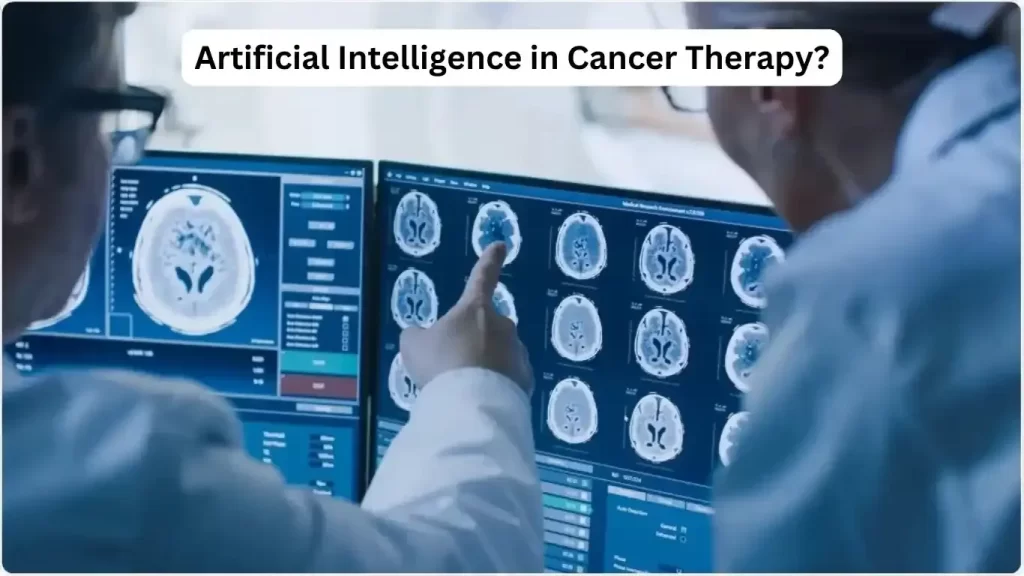
Deep Learning, a subset of machine learning, utilizes complex neural networks to process vast amounts of data. These networks, inspired by the human brain, are designed to recognize intricate patterns within datasets. In cancer therapy, deep learning has proven especially effective in analyzing medical images, such as CT scans, MRIs, and biopsies. These neural networks can detect tumors or other abnormal growths with a high level of accuracy, sometimes outperforming human radiologists.
Applications in Imaging, Diagnosis, and Prediction
The application of deep learning in cancer therapy extends beyond diagnosis. It is used for predictive analytics, helping doctors anticipate how a patient will respond to specific treatments. By analyzing past data on treatment outcomes, deep learning algorithms can recommend the most effective therapy for individual patients. Additionally, deep learning is increasingly used in precision oncology, where treatments are tailored based on the patient’s specific genetic makeup and the molecular characteristics of the cancer.
Natural Language Processing (NLP)
Role of NLP in Analyzing Clinical Data, Research Papers, and Patient Records
Natural Language Processing (NLP) enables machines to understand and interpret human language. In cancer therapy, NLP is used to analyze large amounts of unstructured data, such as clinical notes, research papers, and patient records. It can extract relevant information, such as symptoms, diagnosis, treatment history, and response, and convert it into structured data for further analysis. NLP systems can also assist in literature reviews, identifying emerging trends in cancer research and therapy by sifting through thousands of research papers and clinical trials.
Robotics and Automation
AI-driven Surgical Robots
AI-driven robotic systems are transforming surgery, particularly in cancer treatment. These robotic systems, powered by AI algorithms, can perform highly precise operations with minimal human intervention. For example, AI-driven surgical robots are used in procedures such as prostate cancer surgery, where the robot’s precise movements help in tumor removal while minimizing damage to surrounding tissues. The accuracy and efficiency of AI robotics contribute significantly to improving patient recovery times and reducing the risk of surgical complications.
AI-assisted Precision Therapy and Treatment Planning
AI also plays a pivotal role in precision therapy and treatment planning. Using data from multiple sources, including genetic sequencing and medical imaging, AI systems can develop personalized treatment plans. These plans are tailored to the individual characteristics of the patient’s cancer, maximizing the chances of successful outcomes. AI-assisted treatment planning can also identify the most effective drug combinations, dosages, and schedules for each patient, thereby improving the efficacy of cancer therapies.
Key Applications of AI in Cancer Therapy
Cancer Detection and Diagnosis
Early Detection Using AI-Based Imaging Techniques
AI-enhanced imaging technologies such as CT scans, MRIs, and X-rays help in the early identification of cancerous cells or tumors, sometimes before symptoms appear.
AI algorithms analyze imaging data with higher sensitivity and accuracy, identifying patterns that may be missed by human radiologists.
AI can classify tumors into benign or malignant, enhancing early diagnosis and intervention.
Role of AI in Genetic and Molecular Analysis for Early Cancer Detection
AI techniques, such as genomic sequencing and biomarker identification, analyze genetic information to detect mutations linked to cancer risk.
AI models process complex genetic data to predict the likelihood of cancer and assist in early screening protocols for high-risk individuals.
Precision medicine approaches powered by AI improve diagnostic accuracy by detecting abnormalities in DNA, RNA, or proteins.
Personalized Treatment Plans
Use of AI in Tailoring Therapies Based on Genetic Profiles
AI analyzes individual genetic makeup and integrates it with clinical data to design a personalized treatment plan.
Targeted therapies are developed, where AI suggests drugs that can target specific genetic mutations in cancer cells.
AI-based models can recommend therapies based on how a patient’s genetic profile responds to different drugs.
AI Algorithms in Precision Medicine (Targeted Therapy, Immunotherapy)
AI assists in designing targeted therapies by identifying the specific biomarkers in a patient’s cancer, enabling treatments to be customized for better efficacy.
AI also contributes to the development of immunotherapies by analyzing data from clinical trials and patient outcomes to enhance response rates.
Predictive models help determine which combination therapies (chemotherapy + immunotherapy) are most effective for individual patients.
Radiation Therapy Optimization
AI-Driven Planning for Radiation Therapy
AI helps optimize radiation therapy planning by calculating the ideal radiation dose and the most effective targeting of tumors.
AI algorithms assist in improving the precision of radiation delivery, ensuring minimal damage to surrounding healthy tissues.
AI can automatically contour tumor areas, ensuring accurate and reproducible treatment planning.
AI in Monitoring Radiation Therapy Effectiveness
AI systems can track a patient’s radiation response over time, helping clinicians adjust treatment plans dynamically.
AI-powered imaging is used to monitor tumor shrinkage or changes in tumor behavior during therapy.
Post-treatment data is analyzed by AI to predict long-term outcomes and refine future treatment strategies.
Drug Discovery and Development
AI in Identifying Potential Cancer Drugs
AI accelerates drug discovery by analyzing vast datasets of molecular structures and predicting which compounds may have anti-cancer properties.
Machine learning models identify potential drug targets, reducing the time required for early-stage drug discovery.
AI helps identify repurposed drugs that could be effective for cancer treatment, providing faster options for patients.
Accelerating Clinical Trials Using AI
AI optimizes clinical trial design and recruitment by identifying eligible patients and predicting trial outcomes based on previous data.
AI models improve the accuracy of patient stratification, ensuring the right patients receive the most appropriate therapies.
AI can help identify biomarkers for patient selection, speeding up the process of clinical validation.
Predicting Treatment Response and Prognosis
Machine Learning Models for Predicting Patient Outcomes
AI-powered machine learning models analyze historical patient data, genetic profiles, and clinical characteristics to predict treatment responses and survival rates.
These models can predict both short-term (e.g., immediate side effects) and long-term (e.g., cancer recurrence) patient outcomes.
Role of AI in Monitoring Progress and Adapting Treatment
AI helps monitor real-time treatment progress, adjusting therapies based on patient responses.
Predictive models offer insights into the likelihood of cancer recurrence or progression, allowing clinicians to adapt treatment plans accordingly.
AI in Cancer Surgery
Robotic-Assisted Surgeries (e.g., Da Vinci System)
Robotic surgery systems, such as Da Vinci, utilize AI to assist surgeons in performing precise and minimally invasive procedures.
AI aids in real-time decision-making, guiding the surgeon with enhanced visualization and automation of complex tasks.
AI-Guided Precision Surgery
AI integrates imaging technologies like MRIs and CT scans with real-time surgical data to guide robotic systems during cancer surgery.
By utilizing AI-driven algorithms, surgeries can become more targeted, reducing risks and improving patient recovery times.
Reduced Human Error and Improved Outcomes Through AI
AI helps minimize human error by providing surgeons with continuous data, such as critical patient parameters and tissue health during the surgery.
Studies show that AI-assisted surgeries can lead to faster recovery, less blood loss, and better outcomes compared to traditional methods.


Ethical Considerations in AI for Cancer Therapy
Data Privacy and Security Concerns
As AI relies heavily on patient data, ensuring data privacy and security is paramount to prevent misuse or unauthorized access.
Developing robust data protection policies to safeguard personal and health information is critical in AI-powered cancer therapies.
Bias in AI Algorithms and Ensuring Fairness in Treatment
AI models must be trained on diverse datasets to avoid biased outcomes that may affect certain patient demographics.
Ethical guidelines should ensure that AI algorithms offer equitable treatment options for all patients, regardless of ethnicity, gender, or socioeconomic status.
Patient Consent and Transparency in AI-Based Decision-Making
Patients must be informed about the role of AI in their treatment and give consent for the use of AI tools in their care.
Clear communication regarding AI’s decision-making process helps build patient trust and improves acceptance of AI-driven therapies.
Accountability for AI-Driven Decisions in Clinical Settings
Determining responsibility for clinical decisions made by AI systems, especially in the event of errors or suboptimal outcomes, is a major ethical challenge.
Regulatory frameworks must be developed to define the accountability of both AI developers and healthcare providers.
Challenges in Implementing AI in Cancer Therapy
Lack of High-Quality Data and Data Standardization
AI models in cancer therapy require vast amounts of high-quality, accurate, and well-labeled data for effective training and predictions.
A major barrier is the lack of standardized datasets across different healthcare institutions, making it difficult to apply AI tools universally.
Data diversity is needed to ensure that AI algorithms work effectively across different populations, but inconsistencies in data quality and availability hinder this goal.
Integration of AI with Existing Healthcare Systems
The integration of AI tools into existing electronic health record (EHR) systems and clinical workflows is complex and often inefficient.
Legacy healthcare infrastructures may not be compatible with advanced AI systems, requiring costly and time-consuming upgrades or restructuring of current systems.
AI systems need to work seamlessly with existing diagnostic tools, treatment protocols, and medical devices to avoid disruptions.
Regulatory Approval and Clinical Validation of AI Tools
AI-driven cancer tools must go through rigorous regulatory approval processes, including clinical trials and validation studies, which can be time-consuming and costly.
Regulatory bodies (e.g., FDA, EMA) are still evolving frameworks for AI in healthcare, making it difficult for developers to bring new AI tools to market quickly.
Ensuring the safety and efficacy of AI tools in real-world clinical settings remains a significant challenge.
Trust in AI Among Healthcare Providers and Patients
Both healthcare professionals and patients may be skeptical about relying on AI for critical decisions such as cancer diagnosis and treatment.
There is a need for greater education and awareness about AI’s capabilities, limitations, and benefits to build trust among oncologists, radiologists, and other clinicians.
Clear communication about how AI makes decisions, as well as its human oversight, is essential for fostering confidence in AI-driven solutions.
Future Trends and Developments
AI and Immunotherapy
AI’s ability to analyze large datasets is opening new possibilities in immunotherapy by identifying novel immune checkpoint inhibitors and biomarkers that predict treatment responses.
Personalized immunotherapy regimens can be designed using AI, improving treatment outcomes and reducing unnecessary side effects.
AI in Combination Therapies
AI models will increasingly be used to optimize multi-modal treatment approaches that combine surgery, chemotherapy, radiation, and immunotherapy.
By analyzing patient-specific data, AI can recommend the best combination of therapies, adjusting them based on the patient’s evolving condition.
AI can also predict the synergistic effects of different treatments, improving the chances of success in challenging cases.
AI in Global Cancer Treatment Access
AI has the potential to revolutionize cancer care in low-resource settings by providing affordable, scalable solutions for diagnosis and treatment planning.
AI tools can be deployed in areas with limited access to specialists, improving screening, early detection, and personalized care.
Efforts to make AI-driven cancer treatments more accessible can reduce disparities in global cancer care, offering equitable outcomes.
Advances in AI-Powered Cancer Monitoring
AI will improve the ability to monitor cancer recurrence and metastasis, enabling real-time tracking of disease progression and adapting treatments accordingly.
AI will be used for continuous patient monitoring through wearable devices, analyzing biomarkers, imaging data, and patient-reported outcomes to predict cancer relapse.
AI-enhanced imaging techniques will allow for more accurate and earlier detection of cancer metastasis, improving long-term survival rates.
Case Studies and Real-World Applications
AI in Breast Cancer
AI tools are being used for early detection of breast cancer, improving mammography and ultrasound interpretations.
Machine learning algorithms help in risk assessment, identifying genetic mutations linked to breast cancer and suggesting personalized treatment options.
AI assists in predicting recurrence and response to chemotherapy, enhancing treatment outcomes.
AI in Lung Cancer
AI models analyze CT scans to detect early-stage lung cancer, even in high-risk populations such as smokers.
AI also plays a role in predicting treatment responses, helping oncologists decide whether surgery, chemotherapy, or targeted therapy is best suited for individual patients.
Ongoing AI research focuses on molecular profiling of lung cancer to improve precision treatment strategies.
AI in Prostate Cancer
AI-assisted imaging technologies improve the accuracy of prostate cancer detection in MRI scans, enhancing early diagnosis.
AI models help in personalizing treatments for prostate cancer by predicting patient-specific outcomes and suggesting the most effective therapies.
AI is used for risk stratification, classifying prostate cancer into low, intermediate, or high-risk categories to tailor treatment plans.
AI in Glioblastoma
AI helps in tracking tumor progression and predicting treatment outcomes for glioblastoma patients.
Machine learning algorithms analyze MRI scans and genetic data to identify patterns in tumor growth, allowing for more precise treatment planning.
AI is also being used in tumor segmentation, improving the accuracy of surgical planning and radiation therapy delivery.
Collaboration Between AI and Healthcare Professionals
Role of Oncologists, Radiologists, and AI Experts in Integrating AI into Cancer Care
The successful integration of AI into cancer therapy requires collaboration between oncologists, radiologists, and AI experts to ensure AI tools are clinically relevant and scientifically sound.
AI experts provide the technical expertise, while healthcare professionals ensure AI tools align with clinical needs and real-world challenges.
Interdisciplinary teams work together to improve AI algorithms based on real-world feedback and clinical data.
Interdisciplinary Collaborations for Improving Patient Outcomes
The future of AI in cancer therapy lies in multidisciplinary teams that combine the expertise of clinicians, AI developers, ethicists, and patient advocates.
Collaborative efforts can enhance patient care by integrating AI tools into decision-making processes that involve personalized treatment planning, monitoring, and follow-up.
Human-AI Collaboration vs. AI Replacing Healthcare Professionals
AI should be viewed as a collaborative tool, augmenting the expertise of human clinicians, rather than replacing them.
AI can assist healthcare providers by handling repetitive tasks, analyzing large datasets, and offering data-driven insights, while clinicians make final decisions based on their medical expertise and patient preferences.
Emphasis should be placed on human oversight in decision-making, ensuring that AI is used to support, not supplant, the role of healthcare professionals.
Conclusion
AI is poised to transform cancer therapy through innovations in early detection, personalized treatment, surgery, and drug discovery.
Despite challenges such as data quality, integration issues, and trust concerns, the potential benefits of AI are vast.
Future developments, including its role in immunotherapy, combination therapies, and improving global access, will redefine cancer care globally.
Through continued collaboration between AI experts and healthcare professionals, AI can augment human expertise to offer more effective and personalized cancer treatments, improving patient outcomes and survival rates.
FAQs
See More
Liaison Metallization
You may find more information related to Artificial Intelligence in Cancer Therapy