Maslow’s Hierarchy of Needs
Maslow’s Hierarchy of Needs is a timeless psychological theory that maps human motivation in five distinct levels. From basic survival needs like food and shelter to the pursuit of self-fulfillment, this pyramid illustrates how we strive for growth—one step at a time. Understanding it unlocks the keys to personal and professional fulfillment, revealing what truly drives us.
Maslow’s Hierarchy of Needs is a foundational psychological theory that explains human motivation through a five-tier pyramid model. Developed by Abraham Maslow, this framework categorizes basic to advanced human needs, from physiological survival (like food and shelter) to self-actualization (achieving one’s full potential). Widely used in psychology, education, and business, this theory highlights how unmet needs drive behavior, making it essential for personal growth, leadership, and workplace motivation. Understanding Maslow’s model helps improve mental well-being, productivity, and goal achievement.

Key Takeaways: Maslow’s Hierarchy of Needs Explained
- Five Core Levels (Plus Expanded Needs): Maslow’s original hierarchy of needs includes physiological, safety, love/belonging, esteem, and self-actualization. Later adaptations introduce cognitive, aesthetic, and transcendence needs, broadening its psychological scope.
- Flexible, Not Strictly Linear: While Maslow suggested fulfilling basic needs first, modern psychology shows people often pursue multiple needs simultaneously, making motivation more dynamic than a rigid pyramid.
- Cultural Influences Matter: The hierarchy’s relevance shifts across societies—individualistic cultures may prioritize self-esteem, while collectivist cultures emphasize community and belonging.
- Real-World Applications: From education to workplace management, Maslow’s theory helps address motivation barriers, improving employee engagement, mental health, and productivity.
- Criticisms & Evolving Views: Critics note cultural biases and question the fixed order of needs, suggesting the model is a guideline, not an absolute rule.
What is Maslow’s Hierarchy of Needs?
Abraham Maslow’s hierarchy of needs presents human motivation as a structured pyramid, with basic survival needs at the foundation and self-actualization—the pursuit of creativity, purpose, and intellectual growth—at the peak.
Core Principles of the Hierarchy:
- Foundational Needs Come First: Before pursuing higher goals, individuals must satisfy physiological needs (food, water, shelter) and safety needs (security, stability).
- Progressive Difficulty: As people ascend the pyramid, fulfilling esteem, love, and self-actualization needs becomes more challenging due to psychological, social, and environmental barriers.
- Shift from Short-Term to Long-Term Fulfillment: While lower-level needs are urgent and survival-based, higher-level needs are psychological, abstract, and long-term, requiring sustained effort.
Why This Matters Today
Maslow’s framework remains vital in psychology, leadership, and personal development, helping individuals and organizations understand motivation, goal-setting, and well-being.
This idea also helps in schools, jobs, and therapy to understand what motivates people and how to support their growth.
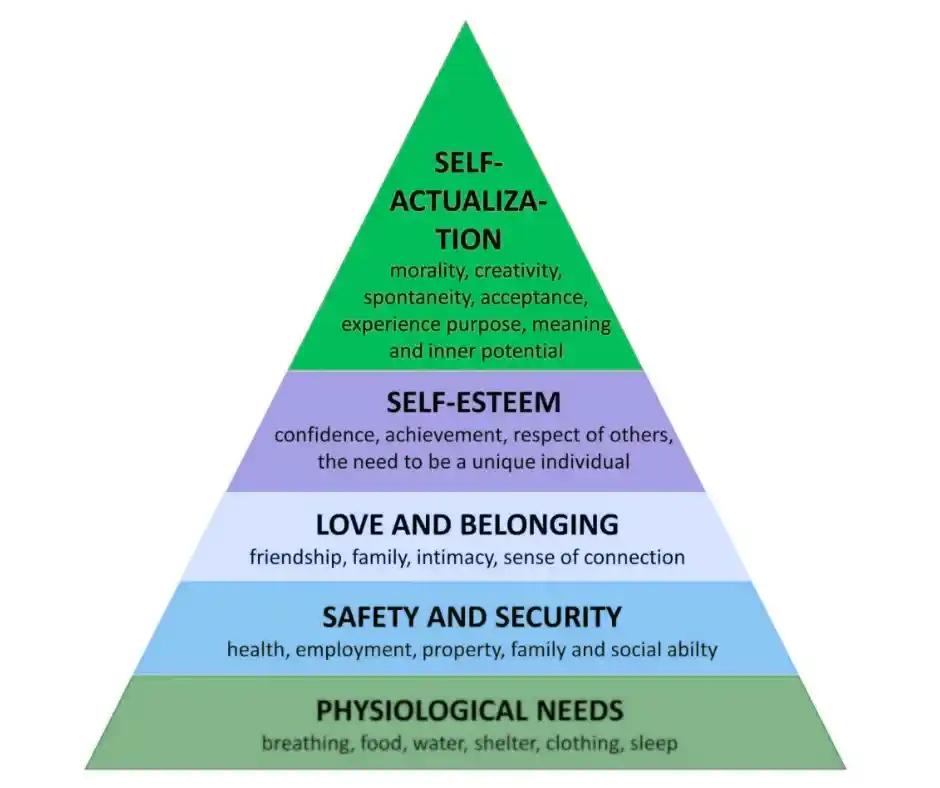
1. Physiological Needs – The Foundation of Survival (Air, food, drink, shelter, clothing, warmth, sex, and sleep)
- What They Are: Basic biological requirements for human survival, including air, water, food, shelter, clothing, warmth, sleep, and reproduction.
- Why They Matter: These are the most urgent needs—without them, the body cannot function properly.
- How They Work:
- They drive our behavior first before any other needs.
- Only once they’re met can people focus on higher-level needs like safety and security.
- Maslow’s View: He called these the most critical needs—all other needs (emotional, social, or personal growth) become secondary until survival is ensured.
Next Step: Once physiological needs are fulfilled, safety needs (security, stability, health) become the priority.
2. Safety Needs – Stability & Protection for a Secure Life (people want to experience order, predictability, and control in their lives)
What Are Safety Needs?
Once basic survival needs (like food & shelter) are met, people seek security, stability, and control in their lives.
How Are They Fulfilled?
- By Family & Society: Through laws, jobs, healthcare, and education (e.g., police, schools, stable income).
- Key Examples:
- Physical Safety (protection from harm)
- Financial Security (stable job, savings)
- Emotional Safety (freedom from fear, stable relationships)
- Health & Well-being (access to medical care)
Why They Matter?
- People need predictability to feel at ease.
- Without safety, stress and anxiety take over, making it hard to focus on relationships or personal growth.
What Comes Next?
Once safety is secured, people seek love, friendship, and belonging (social needs).
3. Love & Belonging – The Human Need for Connection (It refers to refer to an emotional need for interpersonal relationships, affiliating, connectedness, and being part of a group)
What Are Love & Belonging Needs?
These needs drive our desire for meaningful relationships, friendships, intimacy, and social acceptance. We all crave emotional bonds—to love and be loved.
Key Examples:
- Friendship (trust, companionship)
- Family & Intimacy (close relationships)
- Community & Groups (feeling accepted at work, school, or social circles)
- Giving & Receiving Affection (emotional support)
Why They Matter?
- Strongest in Childhood: Kids may ignore safety just to feel loved (e.g., staying with abusive parents).
- Loneliness Hurts: Without connection, people face depression, low self-esteem, and emotional pain.
What Comes Next?
Once we feel loved and accepted, we seek confidence, achievement, and respect (Esteem Needs).
4. Esteem Needs – The Drive for Confidence, Achievement & Respect (It includes include self-worth, accomplishment, and respect)
What Are Esteem Needs?
The 4th level in Maslow’s hierarchy focuses on self-worth, accomplishment, and gaining respect—both from yourself and others.
Two Types of Esteem Needs:
- Self-Esteem (Internal)
- Dignity, confidence, independence
- Mastery of skills, personal growth
- Reputation & Respect from Others (External)
- Status, recognition, prestige
- Being valued in work, relationships, or society
Why They Matter?
✅ Boosts Motivation: People pursue careers, hobbies, and goals to feel accomplished.
⚠️ Low Self-Esteem Risks:
- Feeling unworthy or inferior if needs aren’t met.
- Especially crucial for teens & young adults—external validation often comes before true self-confidence.
What Comes Next?
Once esteem is fulfilled, people strive for self-actualization (reaching their highest potential).
5. Self-Actualization – Reaching Your Highest Potential
What Is Self-Actualization? (It refers to the realization of a person’s potential, self-fulfillment, seeking personal growth, and peak experiences)
The pinnacle of Maslow’s hierarchy, self-actualization is the ultimate human drive—fulfilling your true potential through creativity, purpose, and personal growth.
Key Characteristics:
- Self-Fulfillment: Becoming “everything you’re capable of” (Maslow).
- Personal Growth: Continuous learning, mastering skills, and evolving.
- Peak Experiences: Rare, euphoric moments of achievement (e.g., artistic breakthroughs, athletic wins, or profound personal milestones).
How It Varies by Person:
🎨 Artists might chase creative mastery.
🏆 Athletes strive for physical excellence.
👨👩👧 Parents may define it as raising thriving kids.
Did You Know?
- Few reach permanent self-actualization—but fleeting “peak moments” (like childbirth or acing an exam) give us a taste.
What’s Beyond?
Later, Maslow added transcendence (helping others self-actualize)—but this remains the ultimate goal.

Abraham Maslow’s revolutionary 1943 paper introduced a groundbreaking psychological framework that continues to shape our understanding of human motivation today. His hierarchy of needs explains why our priorities shift as we progress through life’s stages.
When bread is scarce, survival hinges on it alone. But what happens when abundance replaces scarcity, and hunger is no longer a concern?
Immediately, new and ‘higher’ desires take precedence, overshadowing basic physiological needs. As these are met, even more elevated aspirations arise, continuing an upward progression. This is the essence of the hierarchy of human needs—a structured order where each fulfilled level gives rise to the next, ever more significant pursuit (Maslow, 1943, p. 375).
Maslow’s Hierarchy: A Flexible Approach to Human Needs
Key Point: Maslow’s hierarchy of needs does not follow a strict step-by-step progression. Individuals often experience multiple needs simultaneously or shift between different levels based on circumstances.
Maslow refined his theory over several decades, emphasizing that the hierarchy is more fluid than initially perceived (Maslow, 1943, 1962, 1987). In his later work, he clarified that the order of needs “is not nearly as rigid” (Maslow, 1987, p. 68) as he first suggested.
He acknowledged that external factors and personal differences could alter the priority of needs. For instance, some individuals may prioritize self-esteem over love, while others may seek creative fulfillment even before addressing basic survival needs.
Moreover, Maslow (1987) highlighted that most human behavior is multi-motivated, meaning that “any behavior tends to be determined by several or all of the basic needs simultaneously rather than by only one of them” (p. 71).
This dynamic nature of human motivation underscores the adaptability of Maslow’s theory, making it a valuable framework for understanding personal growth and behavior.
Maslow (1954) identified two fundamental types of human needs: deficiency needs (D-needs) including physiological, safety, love/belonging, and esteem requirements that motivate when unmet, and growth needs (B-needs) like self-actualization that increase with fulfillment. This distinction explains why meeting basic needs alone doesn’t guarantee lasting motivation, highlighting our innate drive for personal growth beyond mere survival. The model remains vital for understanding human motivation in psychology, education, and workplace settings.
[Reference: Maslow, A.H. (1954). Motivation and personality. Harper & Row.]
Deficiency Needs: The Foundation of Human Motivation
Deficiency needs are essential for survival and include physiological needs (such as food, sleep, and sex) and safety needs (such as security and protection from danger). When these needs are unmet, individuals are driven by a sense of deprivation to fulfill them.
Maslow (1943) categorized behaviors associated with deficiency needs as deficiency-motivated, meaning they serve as a means to an end. The longer these needs go unmet, the stronger the motivation to satisfy them—such as increasing hunger when food is scarce.
Initially, Maslow suggested that lower-level needs must be fully met before progressing to higher-level growth needs. However, he later clarified that fulfillment is not an all-or-nothing process, stating that “a need must [not] be satisfied 100 percent before the next need emerges” (Maslow, 1987, p. 69).
Once a deficiency need is “more or less” met, it no longer dominates behavior, allowing focus to shift toward higher needs. However, growth needs—such as self-actualization—do not disappear once engaged; they may even become stronger over time.
Growth Needs: The Path to Self-Actualization
Growth needs go beyond survival, focusing on personal development and self-actualization. Unlike deficiency needs, they do not arise from a lack but from an innate desire to grow, learn, and reach one’s full potential. These needs are primarily fulfilled through intellectual, creative, and personal achievements.
When growth needs are sufficiently met, individuals can progress toward self-actualization, the highest level of Maslow’s hierarchy. However, this journey is not always linear. External challenges—such as job loss or personal hardships—can disrupt progress, causing individuals to shift between levels.
Maslow emphasized that while everyone has the potential to strive for self-actualization, movement through the hierarchy is fluid. People may advance or regress depending on life circumstances, making personal growth a dynamic and ever-evolving process.
The Expanded Hierarchy of Needs: Beyond Self-Actualization
Maslow’s original five-stage hierarchy (1943, 1954) evolved over time, expanding to seven and later eight stages in the 1960s and 1970s. These updates introduced cognitive, aesthetic, and transcendence needs (Maslow, 1970a, 1970b), reflecting a broader understanding of human motivation.

The Expanded Hierarchy of Needs
- Biological & Physiological Needs – Essentials like air, food, water, shelter, warmth, sleep, and reproduction.
- Safety Needs – Protection, stability, security, and freedom from fear or chaos.
- Love & Belongingness Needs – Relationships, intimacy, trust, and community.
- Esteem Needs – Divided into self-esteem (achievement, independence) and social esteem (status, prestige, recognition).
- Cognitive Needs – The desire for knowledge, curiosity, exploration, and understanding. These drive intellectual growth, such as a student mastering complex concepts or a traveler exploring new cultures.
- Aesthetic Needs – The appreciation and pursuit of beauty, harmony, and balance in art, music, nature, and life experiences, fostering emotional fulfillment.
- Self-Actualization Needs – Realizing personal potential, embracing growth, and seeking peak experiences.
- Transcendence Needs – Moving beyond the self, seeking connection with a higher reality or purpose. This includes spirituality, altruism, scientific discovery, and profound experiences in nature or art.
Maslow’s expanded model underscores that human motivation is dynamic and multidimensional, with individuals striving not only for survival and success but also for deeper fulfillment, meaning, and transcendence.
Self-Actualization Needs: Unlocking Human Potential
Rather than focusing on psychological disorders, Maslow (1943) developed a positive perspective on human behavior, emphasizing personal growth and fulfillment. He believed that motivation is driven by the desire for self-improvement and transformation (Maslow, 1943, 1954). Self-actualized individuals are those who continuously strive to reach their full potential in their unique way.
Maslow (1962) described self-actualization as a lifelong journey of personal discovery and growth, where individuals continuously evolve rather than achieving a fixed state of fulfillment. As each person is unique, self-actualization manifests differently—some may achieve it through artistic expression, literature, sports, education, or leadership (Kenrick et al., 2010).
A key aspect of self-actualization is experiencing peak moments, where an individual feels deep joy, wonder, and connection with the world (Maslow, 1962). These moments reflect an optimal state of human experience, where life is perceived in its purest and most fulfilling form.
However, Maslow emphasized that self-actualization is not a final destination but an ongoing process (Hoffman, 1988). He described it as the drive to become what one is truly capable of, stating:
“It refers to the person’s desire for self-fulfillment, namely, to the tendency for him to become actualized in what he is potentially… In one individual, it may take the form of the desire to be an ideal mother, in another it may be expressed athletically, and in still another, it may be expressed in painting pictures or in inventions” (Maslow, 1943, p. 382–383).
Self-actualization is a deeply personal journey, where individuals define their own path toward fulfillment and meaning in life.
Characteristics of Self-Actualized Individuals
While self-actualization is theoretically attainable for everyone, Maslow (1970) estimated that only 2% of people ever fully achieve it. He was particularly interested in those who had reached their full potential and sought to understand their defining traits.
By studying 18 individuals he considered self-actualized—including Abraham Lincoln and Albert Einstein—Maslow (1970) identified 15 key characteristics that distinguish self-actualized people:
- Clear perception of reality and tolerance for uncertainty
- Self-acceptance and acceptance of others as they are
- Spontaneity in thought and behavior
- Problem-focused mindset, rather than self-centered concerns
- Unique sense of humor that is not at others’ expense
- Objective perspective on life and situations
- High levels of creativity and original thinking
- Resistance to societal pressures, though not deliberately unconventional
- Deep concern for humanity and social well-being
- Profound appreciation for simple life experiences
- Meaningful, close relationships with a small number of people
- Frequent peak experiences of joy and transcendence
- Need for personal privacy and solitude
- Democratic attitudes, valuing fairness and equality
- Strong moral and ethical standards
Maslow’s research suggests that self-actualized individuals lead deeply fulfilling lives, guided by personal growth, creativity, and a strong sense of purpose. Their qualities reflect both independence and deep social connectedness, making them resilient, open-minded, and driven by meaningful goals.
Behaviors That Foster Self-Actualization
Self-actualization is not just a state of being but a continuous process of personal growth and self-discovery. Maslow (1970) identified key behaviors that help individuals progress toward their full potential. These behaviors encourage authenticity, creativity, and personal fulfillment.
Key Behaviors Leading to Self-Actualization
- Engaging with life fully, like a child, with deep curiosity and concentration
- Embracing new experiences rather than staying in a comfort zone
- Trusting personal intuition over societal expectations or external influences
- Practicing honesty and avoiding superficiality or pretense
- Standing by personal beliefs, even when they are unpopular
- Taking responsibility for actions and working diligently toward goals
- Recognizing personal defenses and having the courage to let them go
By cultivating these behaviors, individuals unlock their potential, enhance self-awareness, and move closer to self-actualization. This journey is highly personal, requiring continuous effort, resilience, and a commitment to authentic self-expression.
While self-actualization is a deeply individualized experience, those who reach it often share common traits. However, it is not about perfection—as Maslow (1970a) stated, “There are no perfect human beings” (p. 176).
Self-actualization does not require possessing all 15 identified characteristics, nor are these traits exclusive to self-actualized individuals. Instead, self-actualization is about realizing one’s full potential, regardless of flaws or imperfections.
Maslow emphasized that self-actualized people can still be silly, wasteful, vain, or impolite and yet continue growing toward their best selves. Despite its attainability, he estimated that fewer than 2% of people ever fully reach this level.
Ultimately, self-actualization is about embracing one’s unique journey, striving for growth, and continually evolving—rather than achieving an idealized or flawless state.
Applications of Maslow’s Hierarchy in Workplace Motivation
Maslow’s hierarchy of needs offers valuable insights for organizations seeking to motivate employees and enhance performance. By aligning HR strategies with the different levels of needs, companies can create a work environment that fosters both well-being and growth.
1. Motivating Employees with Physiological Needs
To address basic physiological needs, organizations must provide competitive wages and comprehensive benefits that enable employees to meet essentials such as food, shelter, and healthcare.
- Healthcare benefits like dental, vision, and mental health coverage.
- Gym memberships or fitness programs to promote physical well-being.
- Ergonomic workspaces to reduce strain and injury.
- Wellness services such as free flu shots or smoking cessation programs.
2. Motivating Employees with Safety Needs
At the safety level, employees are motivated when they feel secure in both their jobs and work environment.
- Job stability with clear job security and equitable compensation.
- Anti-harassment policies and psychological safety to create a secure environment for all employees.
- Transparency in compensation and promotion practices to build trust and safety.
- Clear ethical standards to ensure a sense of security in workplace conduct.
3. Motivating Employees with Social Needs
To meet employees’ social needs, fostering a sense of belonging and community within the organization is essential.
- Team-building exercises and social gatherings that promote camaraderie.
- Mentorship programs to establish personal connections and support networks.
- Inclusive language and behavior, ensuring respect and acceptance across diverse groups.
- Leaders sharing vulnerability, allowing employees to connect on a human level.
4. Motivating Employees with Esteem Needs
Addressing esteem needs involves recognizing employee achievements and empowering them to contribute at higher levels.
- Recognition systems and merit-based promotions.
- Performance reviews to highlight strengths, progress, and areas for growth.
- Mentoring roles, allowing employees to showcase their expertise and leadership.
5. Motivating Employees with Self-Actualization Needs
Self-actualization focuses on aligning employees’ roles with their talents and passions to promote continuous growth.
- Innovation and creative freedom by dedicating time and resources to new ideas.
- Sponsoring continuing education and professional development opportunities.
- Empowering employees with challenges that foster growth and innovation.
Recent Research and Insights
Recent studies emphasize how different work arrangements affect employee motivation and satisfaction. A study by McConnell and Metz (2024) found that hybrid work settings—which balance remote flexibility with in-person collaboration—resulted in significantly higher satisfaction across all five levels of Maslow’s hierarchy compared to fully remote or on-site workers.
This suggests that workplaces offering a balance of flexibility and in-person engagement are better equipped to meet employees’ diverse needs, from basic security to self-actualization.
Furthermore, Ihensekien and Joel (2023) highlight the alignment between Maslow’s hierarchy and Herzberg’s two-factor theory, noting that lower-level needs align with Herzberg’s hygiene factors (e.g., salary and job security), while higher-level needs correspond with intrinsic motivators (e.g., recognition and growth opportunities).
By addressing both extrinsic needs and intrinsic growth needs, organizations can develop a motivated, high-performing workforce. Effective management requires recognizing and fulfilling employees’ diverse needs, ultimately leading to higher engagement and productivity.
Applying Maslow’s Hierarchy of Needs in Nursing
Maslow’s hierarchy offers a holistic approach to patient care, emphasizing the need to address not just physical health, but the mental, emotional, and social aspects of well-being (Jackson et al., 2014; Toney-Butler & Thayer, 2023). By recognizing and meeting the full spectrum of patient needs, nurses can enhance engagement, accelerate healing, and improve health outcomes.
1. Physiological Needs (ABC + D)
The foundation of patient care starts with basic physiological needs, which include proper nutrition, hydration, pain management, and rest. These essential elements support the body’s ability to recover.
- Airway: Ensure the airway remains open for proper breathing.
- Breathing: Assess and support effective breathing and oxygen exchange.
- Circulation: Maintain adequate blood flow and circulatory health.
- Decreased level of consciousness: Monitor for any changes in mental status or behavior, which could indicate complications.
2. Safety Needs
A safe and secure environment is crucial for patient recovery. Nurses should ensure a clean, quiet space and protect patients from harm.
- Injury prevention through fall precautions, blood clot prevention, and pressure ulcer care.
- Foster trust by explaining tests, treatments, and medications to reduce anxiety.
- Maintain confidentiality and demonstrate compassionate listening to create a climate of trust.
3. Belongingness and Love Needs
A sense of connection is vital for recovery. Nurses should address the social needs of patients to combat loneliness and foster healing.
- Include patients in social interactions, introducing them to others or facilitating family visits.
- Support spiritual practices to enhance emotional well-being and sense of belonging.
4. Esteem Needs
Respect and empowerment play a key role in patient care. Nurses should promote dignity and self-worth, helping patients regain confidence during their recovery process.
- Communicate respectfully and practice cultural sensitivity.
- Provide autonomy by involving patients in their care decisions and making them feel valued.
5. Self-Actualization Needs
Encouraging patients to pursue their personal growth and aspirations is integral to their full recovery.
- Align care with patient values and provide motivational resources such as success stories or coping strategies for emotional challenges.
- Support activities that allow for self-expression and personal fulfillment, such as hobbies or personal goals.
Special Considerations in Nursing Care
- Pain Management: Acute or life-threatening pain should always be addressed first, but the priority can vary based on the severity and urgency of the condition.
- Hospice Care: For patients in end-of-life care, the focus may shift to comfort and quality of life, prioritizing emotional support over other physiological needs.
Maslow’s Hierarchy in Education
Maslow’s (1962) theory also significantly influences classroom management and teaching strategies. By addressing students’ basic needs first, educators can ensure that learning can take place at optimal levels. Maslow argued that before cognitive needs are met, a student’s physiological and emotional needs must be fulfilled (Maslow, 1970a). A student who is hungry or tired will struggle to focus on learning.
1. Physiological Needs
Teachers can help by ensuring students have access to snacks, water, restroom breaks, and opportunities for physical movement. Flexible seating arrangements and break times can also contribute to better focus.
2. Safety Needs
An orderly classroom with clear expectations builds trust. Teachers should maintain a bully-free environment and encourage a safe space where students can make mistakes and grow.
3. Belongingness and Love Needs
Fostering a sense of community is vital for students to feel accepted. Teachers can facilitate group projects, learn about their students’ backgrounds, and appreciate diversity.
4. Esteem Needs
To meet esteem needs, teachers should recognize students’ strengths and celebrate progress.
- Display student work and provide leadership opportunities like class roles.
- Praise effort, not just achievements, to build confidence and self-worth.
5. Self-Actualization Needs
Encourage creative exploration and goal-setting. Teachers should provide passion projects, enrichment opportunities, and challenges that push students to pursue their interests and develop to their full potential.
Critical Evaluation of Maslow’s Hierarchy of Needs
Maslow’s Hierarchy of Needs has been instrumental in shaping the understanding of human motivation, but it has also faced substantial criticism. Below is a critical evaluation of the theory, highlighting its limitations and alternative perspectives.
1. Subjective Methodology
A major criticism of Maslow’s work is his reliance on biographical analysis, which was based on a small, subjective sample. Maslow analyzed the lives of individuals he deemed as self-actualized, such as Albert Einstein and Eleanor Roosevelt, to identify characteristics they shared. However, this approach is inherently subjective because it’s based on Maslow’s own interpretations, which can introduce bias. Additionally, the method’s qualitative nature makes it difficult to validate scientifically.
- Problem: Personal biases can significantly affect the reliability and validity of the data, reducing the scientific rigor of his conclusions. This means Maslow’s definition of self-actualization could be more inspirational than empirically sound.
2. Biased Sample and Limited Generalizability
Maslow’s sample of self-actualized individuals was highly biased, primarily consisting of educated white males. Although a few women were included (e.g., Eleanor Roosevelt), they represented a small minority of his sample. As a result, critics argue that the findings are not universally applicable across different demographics, such as women, lower-income individuals, or people from non-Western cultures.
- Cultural Bias: Maslow’s hierarchy may reflect Western individualistic values, which prioritize personal achievement and self-fulfillment. In contrast, many collectivist cultures view community, family, and spirituality as central to personal well-being, potentially reordering the hierarchy. For instance, in many cultures, belongingness and community might be considered a fundamental need, even before basic physiological needs are met.
3. Difficulty in Empirical Testing
Maslow’s theory presents a challenge in empirical testing, especially when attempting to validate self-actualization and the stepwise progression of needs. Critics argue that Maslow’s hierarchy is more speculative than scientifically proven, as it’s difficult to measure and test the abstract concepts of self-actualization or the exact order of needs.
- Problem: The difficulty in establishing causal relationships makes the theory less scientifically rigorous and more philosophical or inspirational.
4. Rigid Progression of Needs
Another key criticism is the rigid progression proposed by Maslow—lower needs must be met before higher-order needs can be pursued. However, this order does not always reflect reality.
- Real-World Examples: People in challenging situations, such as those living in poverty, still pursue higher-order needs like love, belonging, or creativity, even when basic physiological needs (e.g., food or shelter) remain unmet. Historically, some individuals like Van Gogh or Rembrandt lived in poverty, yet demonstrated creativity that aligns with self-actualization.
- Criticism: This challenges Maslow’s assumption that basic needs must be fully satisfied before moving on to higher-order needs.
5. Modern Pluralistic View of Motivation
Contemporary psychologists argue that motivation is multidimensional, meaning that people can pursue several needs simultaneously rather than progressing through a strict sequence. Research, such as Tay and Diener’s (2011) large-scale study across 123 countries, has shown that while basic needs often take priority when unmet, people can still benefit from meeting higher-order needs (e.g., social connection, respect) even when lower needs are not fully satisfied.
- Findings: Diener compared needs to vitamins, suggesting that individuals can experience well-being from fulfilling several needs simultaneously, even if some are still unmet. For instance, people who are hungry might still find happiness in their social relationships.
6. Mental Health Contexts
Maslow’s hierarchy has been applied to mental health contexts, and it has shown limitations, especially in extreme conditions like homelessness and serious mental illness.
- Research by Derejko et al. (2015) found that homeless individuals with mental health issues often expressed self-actualization goals (e.g., pursuing education or creative ambitions) despite lacking basic needs such as food and shelter. This suggests that people may not strictly follow Maslow’s hierarchical order when striving for personal growth or meaning.
- Safety Needs Above Physiological Needs: Studies (e.g., Zheng et al., 2016) on mental health argue that safety might be a more immediate need than physiological needs, particularly for those suffering from anxiety, depression, or trauma. Chronic insecurity (e.g., financial instability, unsafe environments) often takes precedence over fulfilling basic physiological needs.
7. Alternative Motivation Theories
Several alternative theories provide a more flexible and multidimensional approach to motivation, challenging Maslow’s linear hierarchy:
- Alderfer’s ERG Theory: Alderfer’s Existence, Relatedness, and Growth (ERG) theory posits a more dynamic model, where people can pursue multiple needs simultaneously, and frustration-regression can occur—if higher needs are unmet, individuals might refocus on lower-level needs. Unlike Maslow’s theory, which suggests a rigid sequence, ERG theory allows for overlapping needs and offers a more adaptive framework for understanding motivation.
- Self-Determination Theory (SDT): SDT emphasizes autonomy, competence, and relatedness as core motivators, offering a more comprehensive and universal framework that applies across cultures and does not require a strict progression of needs.
Herzberg’s Two-Factor Theory
Herzberg’s Two-Factor Theory builds on Maslow’s distinction between basic needs and growth needs, but it introduces a more nuanced perspective, especially in the context of workplace motivation. Herzberg suggests that lower needs (also known as hygiene factors) do not directly lead to motivation but are essential to prevent dissatisfaction. True motivation, according to Herzberg, arises when higher needs (called motivators) are met, leading to personal satisfaction and engagement.
Key Concepts:
- Hygiene Factors (Dissatisfiers):
These factors are fundamental conditions necessary to prevent dissatisfaction in the workplace but do not actively lead to motivation. Their presence can neutralize dissatisfaction, but their absence leads to dissatisfaction.- Examples of hygiene factors include:
- Salary: Adequate compensation is essential to avoid dissatisfaction, but higher pay alone won’t inspire motivation.
- Job Security: Employees need to feel that their jobs are secure to avoid stress or dissatisfaction.
- Working Conditions: Clean, safe, and comfortable working conditions are necessary to ensure employees are not dissatisfied.
- Company Policies: Fair and clear organizational policies are crucial for ensuring a work environment free of frustration.
- Examples of hygiene factors include:
- Motivators (Satisfiers):
These are factors that genuinely lead to job satisfaction and motivation. When these higher-level needs are met, employees are more engaged, satisfied, and motivated to perform well.- Examples of motivators include:
- Recognition: Acknowledging an employee’s efforts and achievements fosters a sense of accomplishment.
- Responsibility: Giving employees responsibility allows them to feel trusted and valued.
- Personal Growth: Opportunities for personal and professional development make employees feel they are progressing and achieving their potential.
- Achievement: Successfully completing challenging tasks gives employees a sense of pride and fulfillment.
- Examples of motivators include:
Comparison to Maslow’s Hierarchy of Needs:
Herzberg’s theory parallels Maslow’s hierarchy in many ways:
- Hygiene Factors correspond to Maslow’s lower-level needs such as physiological (salary, working conditions) and safety (job security, company policies).
- Motivators align with Maslow’s higher-level needs, such as esteem (recognition, responsibility) and self-actualization (personal growth, achievement).
However, Herzberg’s theory introduces a critical distinction: while Maslow suggests that lower needs must be fully satisfied before progressing to higher needs, Herzberg argues that addressing hygiene factors (such as improving work conditions or increasing salary) removes dissatisfaction but does not necessarily motivate people. True motivation comes only when motivators are present.
Key Points of Herzberg’s Two-Factor Theory:
- Dissatisfaction vs. Motivation: Herzberg emphasizes that simply eliminating dissatisfaction (e.g., improving working conditions or raising salaries) does not automatically result in motivation. Employees must have access to motivators like recognition, growth, and achievement for genuine engagement.
- Workplace Focus: While Maslow’s Hierarchy has broad applications ranging from personal development to education, Herzberg’s theory is mainly applied in organizational settings, specifically focusing on how workplace conditions impact employee motivation.
Criticisms and Limitations:
- Over-simplification: Critics argue that Herzberg’s clear-cut division between hygiene factors and motivators may be too simplistic. For example, some factors (like salary) may act as both hygiene factors and motivators, depending on the situation or individual.
- Cultural Context: Herzberg’s model may not be universally applicable across cultures or industries. In some cultures or sectors, certain hygiene factors (e.g., job security or salary) might hold more motivational value than others.
- Complexity of Motivation: The theory’s premise that dissatisfaction and motivation are entirely separate can be questioned. In reality, factors like job satisfaction and motivation often exist on a spectrum, and the lines between hygiene factors and motivators can be blurred.
Self-Determination Theory (Deci & Ryan, 1985)
Self-Determination Theory (SDT) developed by Deci and Ryan (1985) proposes that human motivation is driven by three fundamental psychological needs: Autonomy, Competence, and Relatedness. Unlike Maslow’s hierarchical model, SDT presents a more holistic view of motivation, where personal growth and well-being emerge from the continuous interaction of these three needs, rather than a rigid progression from lower to higher needs.
Key Concepts of SDT:
- Autonomy:
- The need to feel in control of one’s own actions and decisions.
- It refers to the desire for individuals to act in ways that are congruent with their personal values and interests.
- Autonomy is about having the freedom to make choices, whether in work, relationships, or personal goals, and feeling that one’s actions are self-chosen.
- Competence:
- The need to feel capable and effective when interacting with one’s environment.
- This involves feeling skilled, effective, and achieving mastery in tasks or challenges.
- Competence is about experiencing growth and success in one’s efforts, and it fuels motivation to continue pursuing goals and facing challenges.
- Relatedness:
- The need to feel connected, supported, and accepted by others.
- It refers to forming meaningful social bonds and relationships with others.
- Relatedness is essential for emotional well-being, as it provides a sense of belonging and security.
How SDT Differs from Maslow’s Hierarchy:
- Not Strictly Hierarchical:
Unlike Maslow’s theory, which suggests that individuals must satisfy basic needs before progressing to higher-level needs, Self-Determination Theory (SDT) does not adhere to a strict hierarchical structure. Instead, it proposes that autonomy, competence, and relatedness are ongoing needs that can be pursued simultaneously, regardless of an individual’s stage in a progression.- Maslow suggested a progression of needs, where the lower-level needs must be met before focusing on higher needs (such as self-actualization).
- SDT emphasizes that all three needs are critical for human motivation and well-being at any stage of life, and individuals can be motivated by them simultaneously.
- Intrinsic Motivation Focus:
SDT places a strong emphasis on intrinsic motivation, which is driven by internal factors such as personal interests, values, and enjoyment, rather than extrinsic rewards like pay or status.- Maslow’s model largely centers around external needs (e.g., food, safety, belonging), with personal growth and self-actualization as the culmination of need fulfillment.
- SDT argues that when autonomy, competence, and relatedness are satisfied, individuals are intrinsically motivated, meaning they pursue goals because they are inherently fulfilling or meaningful, rather than motivated by external pressures.
- Cross-Cultural Flexibility:
SDT has been extensively explored across different cultures, with studies supporting the universality of the three basic needs. This suggests that autonomy, competence, and relatedness are universal psychological needs that transcend cultural boundaries and can be pursued at the same time.- In contrast, Maslow’s model was initially developed with a Western perspective in mind, and critics have suggested that its hierarchy may not be universally applicable across all cultures, particularly in collectivist cultures where belongingness and community may be prioritized over individual self-actualization.
Summary of Comparisons:
- Hierarchy vs. Overlap:
- Maslow proposed a loose progression from basic needs to self-actualization, where each lower level must be satisfied before moving on to higher needs.
- Alderfer’s ERG theory and Self-Determination Theory (SDT) allow for overlap, meaning that people can pursue multiple needs simultaneously without following a rigid sequence.
- Deficiency vs. Growth:
- Maslow and Herzberg both highlight the difference between meeting basic needs (preventing dissatisfaction) and pursuing higher-level fulfillment (growth).
- SDT focuses on the idea that meeting growth needs—autonomy, competence, and relatedness—fuels motivation and well-being, which aligns with Maslow’s growth dimensions (esteem and self-actualization).
- Cultural and Individual Variations:
- Alderfer and SDT explicitly acknowledge that needs may differ individually and culturally. They account for variations in how needs are prioritized or expressed across different people and cultures.
- Maslow recognized flexibility but still proposed a somewhat universal pattern of needs.
Maslow vs. Alderfer’s ERG Theory: A Comparative Analysis
When it comes to understanding human motivation, Maslow’s Hierarchy of Needs and Alderfer’s ERG Theory are two seminal frameworks that explore the psychological needs that drive human behavior. Both theories aim to explain how individuals satisfy their needs and how this satisfaction influences motivation. However, while they share some similarities, they also differ significantly in their conceptualization of human needs and the way those needs are fulfilled.
Similarities Between Maslow’s Hierarchy of Needs and Alderfer’s ERG Theory
The Concept of Basic Human Needs
Both Maslow’s Hierarchy of Needs and Alderfer’s ERG Theory propose that humans are motivated by a series of hierarchical needs. In Maslow’s model, these needs are arranged in a pyramid, with lower-level needs (e.g., physiological and safety needs) forming the base and higher-level needs (e.g., esteem and self-actualization) sitting at the top. Similarly, Alderfer’s ERG theory organizes human needs into three categories: Existence, Relatedness, and Growth, which correspond to Maslow’s lower and higher needs.
- Existence Needs in ERG theory correspond to Maslow’s physiological and safety needs. These are the basic survival needs, including food, water, shelter, job security, and safety.
- Relatedness Needs in ERG theory correspond to Maslow’s belongingness and love needs. This includes the need for social connections, relationships, and community.
- Growth Needs in ERG theory align with Maslow’s esteem and self-actualization needs, which focus on personal development, self-worth, and realizing one’s full potential.
Both models recognize the role of needs in motivating behavior, suggesting that individuals are driven to meet these needs to achieve satisfaction and personal growth.
Progression and Fulfillment of Needs
Another key similarity is that both theories propose that individuals must fulfill their needs in order to progress toward a higher state of motivation. In Maslow’s theory, the hierarchy implies that one cannot pursue higher-order needs without first satisfying lower-order ones. Similarly, Alderfer’s ERG theory asserts that as people satisfy lower-level needs, they can begin to focus on the fulfillment of higher-level needs.
Differences Between Maslow’s Hierarchy of Needs and Alderfer’s ERG Theory
Hierarchy vs. Flexibility
One of the most significant differences between Maslow’s Hierarchy and Alderfer’s ERG Theory lies in how each theory views the progression of needs.
- Maslow’s Hierarchy is rigid, with a fixed order of needs that must be satisfied sequentially. In Maslow’s view, an individual must first fulfill their physiological needs before moving to safety needs, and so on. Only once the lower-level needs are completely satisfied can an individual focus on achieving self-actualization.
- Alderfer’s ERG Theory, on the other hand, is far more flexible. While it still acknowledges the importance of fulfilling basic needs (Existence), Alderfer’s model allows for overlapping needs. Individuals can pursue growth and relatedness needs even if some existence needs are not fully met. For example, a person may seek social connections (Relatedness) even if their financial security (Existence) is uncertain. Alderfer also introduces the concept of frustration-regression, which suggests that if a person’s higher-level needs are frustrated, they may regress and focus more on satisfying lower-level needs.
This flexibility in ERG theory makes it more applicable to real-world situations, where individuals may experience fluctuations in their needs and motivations. For instance, someone experiencing economic instability may still strive to achieve personal growth or develop meaningful relationships, which contradicts the rigid linear progression outlined by Maslow.
Empirical Validation and Real-World Applications
Maslow’s rigid progression has been criticized for lacking empirical rigor, especially in real-world scenarios where individuals often demonstrate complex, multidimensional motivations. Many studies have shown that people do not always follow Maslow’s hierarchical order of needs. For instance, individuals who are facing financial hardship may still engage in creative or personal development activities that align with self-actualization, even though their physiological needs have not been fully met.
Alderfer’s ERG Theory offers greater empirical applicability in such scenarios. Since the theory allows for overlapping needs, it better reflects the complexity of human motivation in real-world contexts. This flexibility is especially evident in environments where people face adversity but still pursue higher-order goals, such as personal growth and social connections.
The Frustration-Regression Principle
Alderfer’s Frustration-Regression Principle is another key feature that differentiates his model from Maslow’s. This principle suggests that if a person is unable to satisfy higher-order needs, they might regress to focusing more intensively on fulfilling lower-order needs. For example, if someone cannot achieve personal development (Growth) due to external constraints, they might focus more on securing their existence (e.g., financial stability) or enhancing their social connections (Relatedness). This dynamic is not part of Maslow’s model, which assumes a linear progression of needs from basic to complex.
Strengths and Limitations of Both Theories
Maslow’s Strengths
- Maslow’s theory provides a clear, structured framework for understanding human motivation, making it easier to communicate the general progression of needs.
- It has been widely used in various fields, from education to healthcare, providing valuable insight into how human needs influence behavior and performance.
Maslow’s Limitations
- The rigidity of Maslow’s hierarchy has been challenged by modern research, which shows that needs do not always follow a strict linear progression.
- Cultural bias: Maslow’s model has been criticized for being primarily Western in its outlook, as it emphasizes individual fulfillment over collective or community-based goals.
Alderfer’s Strengths
- Flexibility: The ERG theory offers greater realism by accounting for individuals who might pursue higher-level goals even if basic needs remain unmet.
- Frustration-Regression: The frustration-regression principle provides a more nuanced understanding of human motivation, especially in complex environments like workplaces or poverty-stricken areas.
Alderfer’s Limitations
- While ERG is more flexible, it may lack the clarity of Maslow’s strictly hierarchical model, potentially making it more difficult to apply in structured, step-by-step scenarios.
See More
Strategic Liaison Center
Join the elite network of Technical Cadets. Access our verified channels for real-time bulletins, officer mentorship, and career intelligence.